Why Every Startup Needs a Custom Website Instead of Templates
Discover why every startup needs a custom website instead of templates. Learn how a custom website improves branding, scalability, security, SEO performance, and long-term business growth.
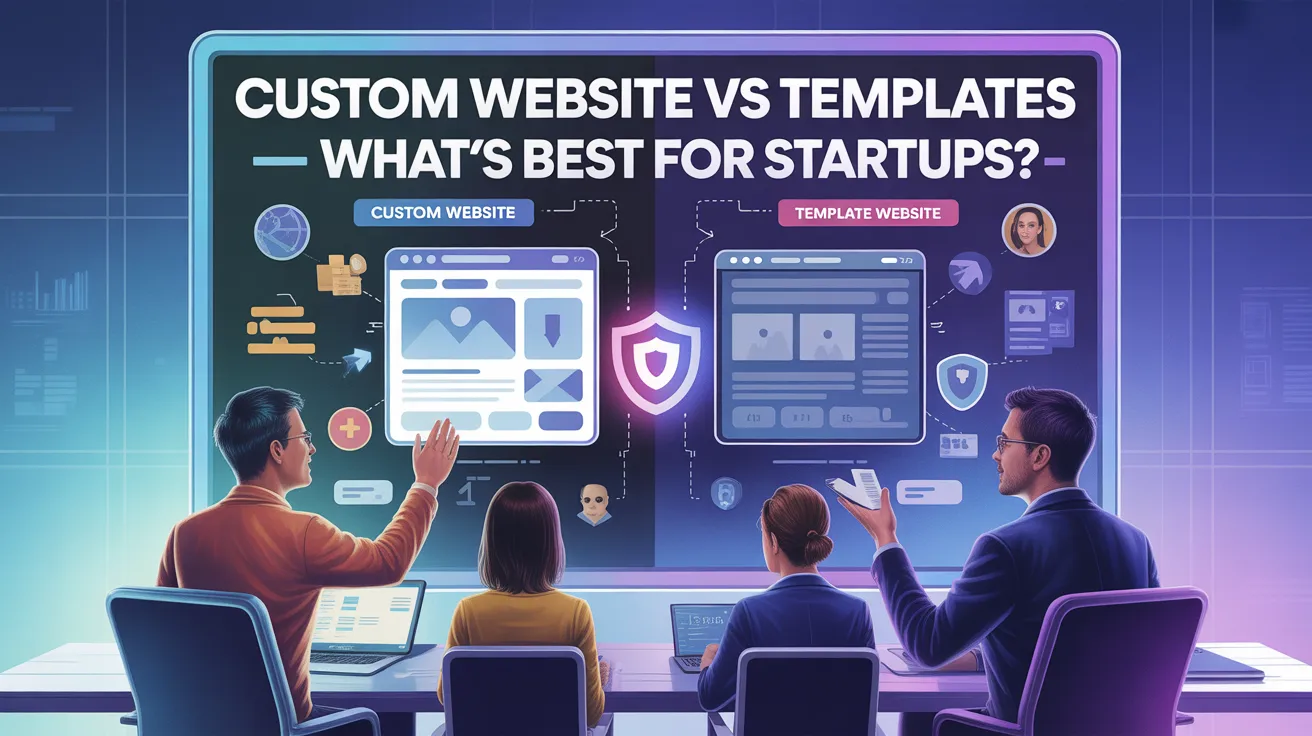
In today’s competitive digital landscape, every startup is fighting for visibility, credibility, and growth. While launching a business is already challenging, choosing the right digital foundation can make or break long-term success. One of the most important decisions founders make is whether to build a custom website or rely on pre-designed templates. Although templates may seem affordable and quick, they rarely provide the flexibility, scalability, and performance a growing startup truly needs. A custom website, on the other hand, offers strategic advantages that support branding, functionality, and future expansion. This article explores why investing in a custom website is the smartest move for startups that want to stand out and grow sustainably. For most startups, the website is the first interaction customers have with the brand. Within seconds, visitors form opinions about credibility, professionalism, and trustworthiness. Template-based websites often look similar to thousands of others because they are built from pre-made layouts. Even after minor modifications, the structure and design patterns remain recognizable. A custom website is designed specifically for your startup’s identity, vision, and target audience. Every element—from typography and color scheme to layout and user flow—is crafted intentionally. This uniqueness builds trust and creates a memorable brand experience. In a crowded market, differentiation is everything, and a custom website ensures your startup does not blend into the background. Brand identity is more than just a logo. It includes voice, design, messaging, and user experience. Templates limit creative freedom because they come with fixed structures. When startups try to adjust templates heavily, they often face technical restrictions or design inconsistencies. With a custom website, the entire interface is built around your brand story. Designers and developers work together to reflect your startup’s mission through visuals and interactions. This consistency strengthens brand recognition and improves customer loyalty. A startup that presents itself with a cohesive identity appears more established and reliable. Website speed is crucial for user retention and search engine rankings. Many templates include unnecessary code, unused features, and bulky plugins. This extra load slows down performance, especially on mobile devices. A custom website is built with clean, optimized code tailored to your specific requirements. Since developers only include necessary features, the result is faster loading times and smoother performance. Startups benefit from improved user engagement and lower bounce rates. Fast websites also enhance credibility and customer satisfaction. Visibility on search engines is essential for startup growth. Templates often restrict technical SEO customization, such as structured data implementation, advanced meta control, and optimized architecture. Additionally, template themes may generate repetitive code structures that limit optimization opportunities. A custom website allows full control over technical and on-page SEO elements. Developers can structure the site architecture strategically, optimize loading speed, create clean URLs, and implement schema markup effectively. This flexibility improves search engine performance and increases organic traffic. Startups relying on strong SEO strategies will find that a custom website supports long-term discoverability. Startups aim to grow, evolve, and expand. What works in the first year may not be sufficient in the third year. Templates are designed for general use cases and often lack scalability. Adding new features, integrations, or custom workflows can become difficult and expensive. A custom website is built with scalability in mind. Developers plan architecture that supports expansion, whether it involves adding new product pages, integrating advanced tools, or transforming the website into a web application. This future-ready approach ensures that your startup does not outgrow its digital infrastructure. Security is a major concern for startups, especially those handling customer data, transactions, or sensitive information. Templates, particularly widely used ones, are common targets for hackers. Vulnerabilities in themes or plugins can expose startups to cyber threats. A custom website offers stronger security because it is built uniquely and can follow strict development standards. Developers can implement advanced security protocols, custom authentication systems, and regular updates tailored to the startup’s needs. Reduced dependency on third-party plugins also minimizes potential risks. For startups focused on long-term stability, investing in a secure custom website is essential. User experience directly impacts conversions and customer retention. Templates follow generic layouts designed to suit multiple industries. However, each startup has a distinct audience with specific behaviors and expectations. A custom website allows designers to map user journeys carefully. Every button placement, navigation menu, and call-to-action is strategically positioned to guide visitors toward conversion. Personalized experiences improve engagement and make interactions intuitive. Startups can design workflows that align perfectly with their business model instead of adjusting their model to fit a template. Modern startups often rely on various tools such as CRM systems, analytics platforms, payment gateways, and automation software. Template-based platforms may limit integration options or require expensive add-ons. With a custom website, developers can seamlessly integrate third-party systems or even build custom solutions from scratch. Whether it is a unique dashboard, AI-driven recommendation system, or advanced booking module, a custom website supports innovation. Startups aiming to leverage technology for competitive advantage benefit greatly from this flexibility. Templates are not designed with your startup’s specific sales funnel in mind. They provide general layouts that may not align with your marketing strategy. Conversion rate optimization requires data-driven design adjustments. A custom website allows startups to implement personalized landing pages, A/B testing frameworks, and optimized checkout processes. Since the structure is not restricted, every element can be refined based on performance analytics. This adaptability increases leads, sales, and overall return on investment. Many template platforms operate within proprietary ecosystems. This can limit control over hosting, backend access, and advanced customization. Migrating from one platform to another can be complicated. A custom website provides full ownership of code and infrastructure. Startups can choose hosting providers, update features independently, and modify the system without platform restrictions. This independence reduces long-term costs and ensures operational freedom. In competitive industries, differentiation determines survival. If multiple startups use similar templates, they risk appearing interchangeable. A custom website helps communicate innovation and originality. When visitors encounter a thoughtfully designed platform tailored to their needs, they associate the startup with professionalism and innovation. This perception strengthens competitive positioning and builds brand authority. Although templates seem affordable initially, hidden costs often emerge. Premium plugins, customization services, performance fixes, and redesigns can accumulate expenses over time. Additionally, limitations may force startups to rebuild their websites entirely as they grow. A custom website may require a higher upfront investment, but it reduces recurring modification costs. Since the architecture is built specifically for your needs, maintenance and updates are more manageable. Over the long term, this approach proves more cost-effective. Startups frequently experiment with new strategies, campaigns, and product launches. Templates restrict layout flexibility and feature development. Major modifications may break design consistency or require complex coding adjustments. With a custom website, flexibility is built into the framework. Whether launching a new product line, adding subscription services, or redesigning landing pages, changes can be implemented smoothly. This adaptability supports innovation without compromising stability. Investors and partners often evaluate startups based on digital presence. A generic template can create an impression of limited commitment or early-stage instability. A custom website demonstrates strategic thinking and long-term planning. Professional presentation influences investor confidence. When stakeholders see a scalable and well-developed platform, they perceive the startup as serious and growth-oriented. This credibility can positively impact funding opportunities. Modern customers expect personalized experiences. Templates rarely support advanced personalization without extensive modifications. A custom website enables dynamic content, user-based recommendations, and tailored interactions. By analyzing user data and behavior, startups can present relevant offers and information. Personalization increases engagement and builds stronger relationships with customers. In competitive markets, this level of attention sets startups apart. Templates are built to serve broad audiences, which means they include generalized features. When startups attempt to implement specialized functionality, they often encounter technical barriers. A custom website removes these limitations. Developers design architecture that supports unique workflows, complex databases, and interactive features. Startups can innovate freely without worrying about structural constraints. As startups evolve, branding strategies may shift. Templates may not accommodate significant redesigns without starting from scratch. This leads to inconsistencies and additional expenses. A custom website evolves alongside your startup. Developers can update design elements, restructure navigation, or expand functionality without rebuilding the entire system. This adaptability ensures continuity and long-term stability. More Blogs: Why most businesses fail digitally & how can you avoid it Every startup aims to grow, differentiate, and build trust in a competitive environment. While templates offer convenience, they fall short in flexibility, scalability, security, and brand identity. A custom website provides tailored design, optimized performance, strong SEO capabilities, and complete ownership. It supports innovation, integration, and long-term growth without technical restrictions. For startups serious about establishing a strong digital foundation, investing in a custom website is not an expense—it is a strategic decision. By choosing customization over convenience, startups position themselves for sustainable success, improved credibility, and lasting competitive advantage. In a world where first impressions happen online, a custom website ensures that your startup stands out with confidence, professionalism, and purpose.1. First Impressions Define Startup Success
2. Strong Brand Identity and Consistency
3. Better Performance and Speed Optimization
4. Search Engine Optimization Advantages
5. Scalability for Future Growth
6. Enhanced Security and Data Protection
7. Tailored User Experience (UX)
8. Integration with Advanced Technologies
9. Improved Conversion Optimization
10. Ownership and Long-Term Control
11. Competitive Advantage in a Saturated Market
12. Cost Efficiency Over Time
13. Flexibility in Design and Functionality
14. Professional Credibility and Investor Confidence
15. Personalization and Customer Engagement
16. Reduced Technical Limitations
17. Long-Term Brand Evolution
Smart IT strategies that help businesses generate consistent leads
How the right IT partner can 2x your business growthConclusion
About the author

Aman Gupta
Founder & CEO at InfoTechBrains, helping SMEs scale and reduce manual work with AI, automation and custom software.
View LinkedIn ProfileView profile & all posts →